
Should You Be Polite to AI?
There are three things southerners in the United States take very seriously: fried food, college football, and good manners.[1] Few could argue with that statement. To have good manners and to be polite are not reserved only for the “Southern hospitality” demographic. For centuries, young boys and girls have been taught to use words well, show respect to others, and be polite. Simply put, being polite and having good manners is laudable.
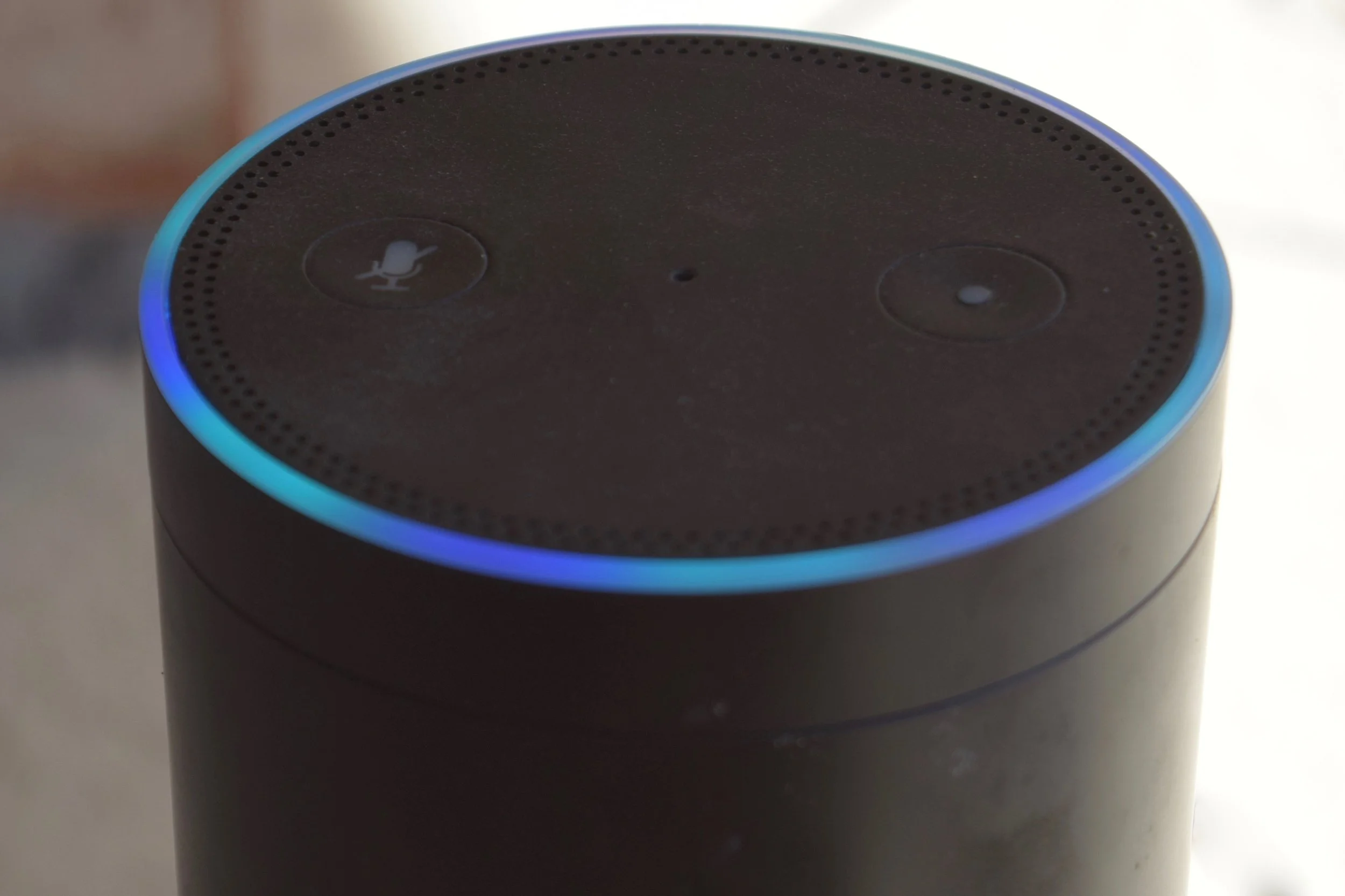
With the growth of artificial intelligence (AI) and the normalization of interacting with computer bots for everyday tasks, an interesting question is now being asked. When talking or texting with an AI “person” is it right or wrong to be polite?
Parents who are perpetually telling their children to show respect for others, be appreciative, and have good manners, what is best, proper, and even biblical advice regarding interaction with Siri, Alexa, Google, ChatGPT, and the numerous chatbots and AI interfaces available?
When typing a conversation with a chatbot online, is it helpful to be polite? Should one thank the computer for doing what it has been programmed to do? Does binary code respond better if the human is complimentary?
Is this really an issue? Some say it’s making a mound out of a mole hill. Others say there is a deeper principle often ignored that eventually may create problems. Parents may fear that children taught not to be polite to machines will end up not being polite to other people. We are certainly asking questions that previous generations could never have imagined.
It’s Right to Be Polite
In 2019 a Pew Research study found that over fifty percent of people who owned smart devices such as Amazon Echo or Google Home say “please” when speaking to the devices.[2] It seems the human-like responses these AI devices offer lead people to their default setting of being polite and kind to others. For anyone who grew up being continually reminded to show respect and be kind to others, saying please and thank you are often natural. We’re reminded of Christ’s words in Matthew’s gospel account.
“So whatever you wish that others would do to you, do also to them, for this is the Law and the Prophets. Matthew 7:12 (ESV) [3]
Thus, the argument to just be kind, use kind words, say please and thank you, and all that resonates in our minds regarding manners seems to be valid.
Yet, being kind to a person is vastly different than being kind to a machine. When you open the door of your refrigerator to get a cold drink, should you say thank you? When you arrive to your desired destination, is it right to show appreciation to your car? Those sound ludicrous, but there are refrigerators that connect to Wi-Fi and place items on grocery lists automatically and cars are more computer than ever before.
In screenwriter Scott Z. Burns podcast “What Could Go Wrong?” he examines the details of working with AI. Burns stated “Kindness should be everyone’s default setting—man or machine. While it is true that AI has no feelings, my concern is that any sort of nastiness that starts to fill our interactions will not end well.”[4]
Burns’ fear is shared by many others.
Apparently when using AI models, most users desire a more human-like response from the computers and thus, being polite seems normal, natural, and right. Users state that the neutral responses from the devices seem weird when one is not polite.[5] However, when it feels weird when a machine acts like a machine, perhaps that means a red flag should go up?
The Cost of Being Polite
There is a cost to being polite to a machine. OpenAI’s CEO Sam Altman responded to a question about cost online earlier this year that caused many to pause. While ChatGPT, OpenAI, and other AI tools are readily available (and used by default in many search engines and social media apps) the practical costs of such data crunching are mostly unknown to the masses.
There are numerous costs associated with AI development. They include the needed hardware and licensing fees, costs of data collection, integration with existing systems, and costs of ensuring AI practices are ethical and relevant among others.[6] Every question and response has a cost. Thus, when Altman was asked about the costs associated with polite interactions with language models (AI chatbots and devices) he responded that OpenAI has spent “tens of millions of dollars” due to the extra words included in requests out of politeness. He did say it was money well spent.[7]
The cost that Christians should be more concerned about are deeper than the money spent by software and hardware corporations.
In a recent interview with Seth Troutt, pastor at Ironwood Church in Phoenix, Arizona and author of Digitzation & Neodocetism: Generation Z’s Understanding of Their Bodies in Light of Expanding Digital Existences, with World’s daily news podcast “The World and Everything In It” he shared his concerns with treating AI devices as if they are people. He stated that when his family first obtained an Apple HomePod, he became concerned how his children responded in hearing him bark commands to Siri (Apple’s AI voice). Thus, he faced what many have faced. He too began saying please and thank you to the device. Why? To teach his children good manners.
He then stated that he regretted that decision.
The concern was that his children would have a blurry understanding between what is a person and what is a machine.[8]
As Troutt continued to share, his clarity over the real issues resonated. He stated that he is now less concerned about modeling kind speech to AI and more concerned about modeling speech that humanizes the non-human.[9]
I laugh when I watch my granddaughter try to ask Alexa questions on our Echo Dot, mainly because she does not quite understand which type of questions Alexa can answer. Just so you know, Alexa does not know my favorite animal…yet. While it is cute to see her try to chat with the device, I am thankful she is thus far bored with it after two or three questions and ready to go read a book or play with her brother. It seems at this point she does understand that the little round device on the shelf is not human…but her voice sounds human.
That leads to one of Troutt’s recommendations. When his five-year-old asked if Siri was a she, he responded with “No, but it’s pretending to be.” That is the right response in this confusing era where people are seeking to choose their desired genders despite their biological sex. If Christians rightly will not tolerate men pretending to be women or women pretending to be men, we should not tolerate algorithms pretending to be men or women either.[10]
It is recommended that gender is not assigned to an AI device. In other words, we should not say “She answered wrongly” but “It answered wrongly.” The humanization of the language models may seem like such a small matter to most, even Christians. However, as children of God we must remember that since the Garden of Eden the Enemy has been working to devalue the image bearers of God. Even Jiminy Cricket sang “You, the Human Animal” in a 1955 animated short for Walt Disney.[11] Innocent? Sure. Until you recognize the subtle message that has been promoted by humanists and evolutionists for decades that human beings are nothing more than a highly developed animal. When humans are not special creations, people drift toward elevating all of creation to a place it never was meant to be. Being less than an image bearer of. God not only devalues humans but seeks to devalue God.
In addition to not assigning a gender to the computer, Troutt recommends not treating AI as a mind. Descartes wrote, “I think therefore I am.”[12] Large Language Models (LLM) do not think. These models amalgamates according to its programming.[13] There is no “I think…” to an AI model, only generative recommendations based on the reorganization of preexisting material.
Whether or not creators of software or computer devices are intentionally seeking to devalue the image bearer through AI, it is happening. Even Christians are often caught off guard.
The jokes about the machines taking over and the references to Cyberdyne Systems[14] seem to come every time a new robot is shown online interacting with human beings. The general-purpose embodied robots powered with AI are amazing…and a bit frightening.[15]
Nevertheless, I am not proposing a fear of AI. As God said to Timothy through the apostle Paul…
For God gave us a spirit not of fear but of power and love and self-control. 2 Timothy 1:7 (ESV) [16]
I also like how the New King James Version translates this verse.
For God has not given us a spirit of fear, but of power and of love and of a sound mind. 2 Timothy 1:7 (NKJV)[17]
A sound mind! Years ago, Josh McDowell and Bob Hostetler authored a book titled Don’t Check Your Brains at the Door. It was written for teenagers, but the premise is clear in the title. Christians must renew our minds continually and think deeply.
It is to our disadvantage to ignore red flags and to not seek wisdom. Jesus warned his disciples of the realities of the world as he sent them (and ultimately us) out.
“Behold, I am sending you out as sheep in the midst of wolves, so be wise as serpents and innocent as doves. Matthew 10:16 (ESV)[18]
Is It Right to Be Polite to AI?
Absolutely! It is very right to be polite, to be kind, and to have good manners. It is biblical. It is honorable.
Is being polite to your AI bot really an issue? Not for most. In fact, the issue is not even AI.
AI is here. It is growing fast. No one really knows at this point the impact of these language models. There are many promises, but few fulfilled ones yet. I use AI, just like anyone else who uses a search engine. I have an Echo Dot in my office (it was given to me and hundreds of other pastors by our mission board).
Is it a sin to say thank you to Alexa or Siri? No. Not at all.
The issue with being polite to AI is not so much about AI as it is about understanding the value of the image bearer. In an era where people struggle with personal relationships, engaging with a computer seems easier. Decades ago, unions and company employees lamented the replacement of workers with automated robots. Now, we lament the replacement of human friends and romantic relationships with automated voices and robots.
I don’t recommend throwing away your computers or smart devices. I do recommend renewing your mind daily as scripture states and to not live in fear, but have soundness of mind.
And remember, Jesus died for men, women, boys, and girls…not a digital voice comprised of binary code.
____________________
[1] McDonald, Jorie Nicole. “46 Quotes That Remind Us Why Southern Manners Are So Important.” Southern Living, Southern Living, 6 Nov. 2025, www.southernliving.com/culture/manners-quotes.
[2] Auxier, Brooke. “5 Things to Know about Americans and Their Smart Speakers.” Pew Research Center, Pew Research Center, 21 Nov. 2019, www.pewresearch.org/short-reads/2019/11/21/5-things-to-know-about-americans-and-their-smart-speakers/.
[3] The Holy Bible: English Standard Version (Wheaton, IL: Crossway Bibles, 2016), Mt 7:12.
[4] Deb, Sopan. Saying ‘Thank You’ to CHATGPT Is Costly. but Maybe It’s Worth the Price. - The New York Times, The New York Times, 24 Apr. 2025, www.nytimes.com/2025/04/24/technology/chatgpt-alexa-please-thank-you.html.
[5] Caswell, Amanda. “Here’s What Really Happens When You Don’t Say ‘thank You’ to CHATGPT - and Why I Always Do.” Tom’s Guide, Tom’s Guide, 23 Apr. 2025, www.tomsguide.com/ai/heres-what-really-happens-when-you-dont-say-thank-you-to-chatgpt-and-i-why-i-always-do.
[6] “AI Pricing: How Much Does Ai Cost in 2025?: Future Processing.” Technology & Software Development Blog | Future Processing, 7 Nov. 2025, www.future-processing.com/blog/ai-pricing-is-ai-expensive/.
[7] Reyes, Marta. Why You Shouldn’t Say “Thank You” and “Please” to CHATGPT | by Marta Reyes | Medium, Medium, 24 Apr. 2025, medium.com/@martareyessuarez25/why-you-shouldnt-say-thank-you-and-please-to-chatgpt-2910da23b3f3.
[8] The World and Everything In It: November 5, 2025 | World, 5 Nov. 2025, wng.org/podcasts/the-world-and-everything-in-it-november-5-2025-1762262237.
[9] The World and Everything In It: November 5, 2025.
[10] The World and Everything In It: November 5, 2025.
[11] “‘You the Human Animal’ Starring Jiminy Cricket.” The Retroist, The Retroist, 11 Mar. 2020, www.retroist.com/p/you-the-human-animal-starring-jiminy-cricket.
[12] Maden, Jack. “I Think Therefore I Am: Descartes’ Cogito Ergo Sum Explained: Philosophy Break.” Latest Breaks RSS, Philosophy Break, philosophybreak.com/articles/i-think-therefore-i-am-descartes-cogito-ergo-sum-explained/. Accessed 29 Nov. 2025.
[13] The World and Everything In It: November 5, 2025.
[14] “Cyberdyne Systems.” Terminator Wiki, Fandom, Inc., terminator.fandom.com/wiki/Cyberdyne_Systems. Accessed 29 Nov. 2025.
[15] Leath, Mason. ABC News, ABC News Network, 28 Nov. 2025, abcnews.go.com/Business/meet-humanoid-robot-set-new-world-walking-record/story?id=127942444.
[16] The Holy Bible: English Standard Version (Wheaton, IL: Crossway Bibles, 2016), 2 Ti 1:7.
[17] The New King James Version (Nashville: Thomas Nelson, 1982), 2 Ti 1:7.
[18] The Holy Bible: English Standard Version (Wheaton, IL: Crossway Bibles, 2016), Mt 10:16.