
A Revolutionary Republic…If You Can Keep It
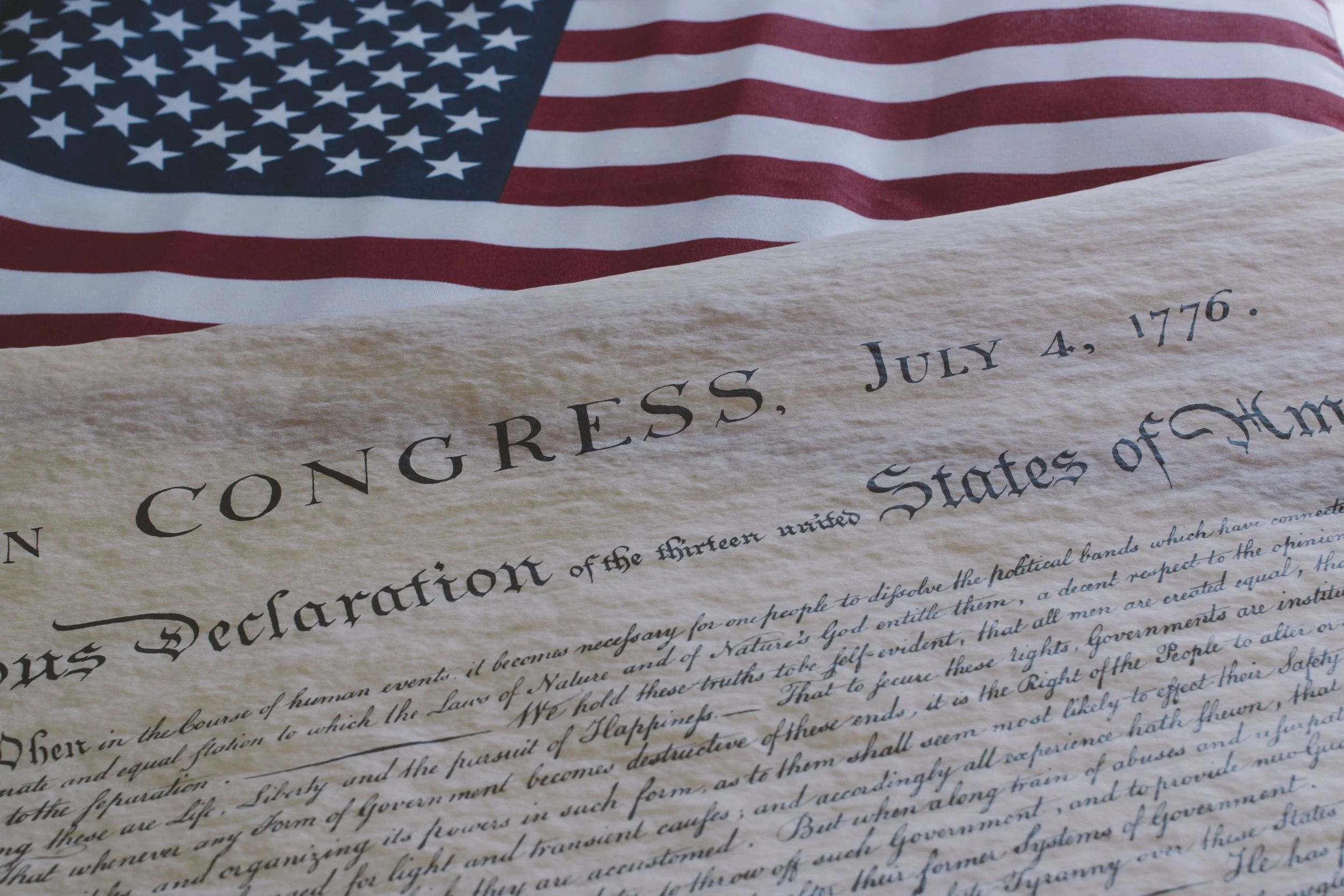
The 250th anniversary of the birth of the United States of America has rightly moved many to revisit our nation’s history. Fifty years ago, as the nation was celebrating our bicentennial, there seemed to be an overwhelming obsession with celebrating two-hundred years of existence. Nostalgia causes some to long for bygone days. Some may say those were simpler days, perhaps more innocent and easier. However, 1976 had its own issues.
Today there appears to be a brokenness in our political system, with divides among and within parties wider than ever. Prices are rising. Wars and rumors of wars continue. Fear of AI and data centers trend online. Marriages are failing. Families are struggling. Crime, ideological shifts, scandals, religious deconstruction, and more seem to drive each day’s headlines.
Fifty years ago, as many were leaning into the patriotic fervor of the bicentennial celebrations, there were…issues as well.
Perceptions do not always reflect reality.
In 1976 the homicide rate was five times worse in New York City than today. Inflation was rampant. Gas lines were commonplace. Unemployment was higher on average.[1] Political life was more divided than many remember as Gerald Ford was seeking to put his pardon of Richard Nixon behind him and win the election for a second term as President without Watergate destroying him. Ford barely survived a push from Republican candidate Ronald Reagan to win his own party’s primary. He did not win the presidential race (remaining the only President never to be elected either as Vice President or President) losing to Georgia Governor Jimmy Carter. Yet, history tells us that the new administration would have its own set of issues. Race relations in 1976 were hot buttons. The Cold War was raging. The Vietnam War was finally over, with the final troops leaving in 1975, but the impact of the conflict remaining.
Perhaps the nostalgia that many feel is simply a homesickness for a bygone day or place, viewed through lenses tinted rose.
I remember the bicentennial fondly. However, I was only eight years old at the time. From my perspective, learning about our nation’s history in school was fun. The Bennington Flag and the Betsy Ross flag were everywhere. Stories of George Washington, Paul Revere, Benjamin Franklin, the Boston Tea Party, the crossing of the Delaware, Lexington and Concord, the Declaration of Independence, and more were shared and celebrated. Thanks to “Schoolhouse Rock” on Saturday mornings, I was even able to memorize the preamble of our nation’s Constitution.[2]
The Great Risk
This experiment known as the United States of America is amazing. When you delve into the actual history and peel away that which is myth (Washington’s cherry tree and Longfellow’s version of Revere’s ride as examples) the great risk and danger of those who dared to stand against the British Empire sound too amazing to be true. Yet it was. These were very real people putting not only their lives, but the lives of their loved ones and friends on the line. Soldiers and generals put aside their red jackets, worn proudly during the French and Indian War and replaced them with blue ones (or any color than red). The lines were drawn and there was no going back.
For the most part, the names cemented in history now were younger men at the time of the American Revolution, with just a few over the age of forty. The statesman Benjamin Franklin was the senior signer of the declaration that would either end either in independence for the patriots or death. Franklin was seventy. War was not his desire. Like many, the reality of war became inevitable. Franklin stated, “There hardly ever existed such a thing as a bad peace or a good war.”[3] Yet, the larger story prevailed.
The American founders were religious men, though not all born-again Christians. Whether Christian or simply deist, the fact remains that the version of secularism popular today was nonexistent as such during the late 18th century. Thus, when people get bent out of shape when terms like “Christian Nationalism” are used now, it behooves us to recognize that even deists such as Benjamin Franklin, who rejected the Puritan faith of his parents as a teenager would as an octogenarian propose that meetings of the Constitutional Convention open with prayer to God. In his own papers he wrote, “How it happened that we have not, hitherto once thought of humbly applying to the Father of Lights to illuminate our Understandings?”[4]
The Great Revolution
It is not simply coincidental that the American Revolution and the Great Awakening were connected. The English clergyman George Whitefield riveted American colonists with his preaching, writing, and persona. He has been called “The Grand Itinerant” as he was a traveling preacher who toured the colonies seven times between 1730 and 1760. His sermons were preached in open-air settings holding huge audiences spellbound. God used his messages to “awaken” the souls of the hearers it is said. Thus the “Great Awakening.”[5]
Franklin and Whitefield became the most unlikely of friends. While they held vastly different beliefs in the person of God, salvation through Christ, and the message of the gospel, they became and remained friends. Franklin stated, “Ours was a mere civil friendship, sincere on both sides, and lasted to his (Whitefield’s) death.”[6]
The hearts of colonists were experiencing a revolution under this awakening. This was a personal revolution of the heart and soul as many were rebelling against the sin that defined them, turning to Christ and the life and freedom in the Spirit. The English preacher Charles Spurgeon was an admirer of Whitefield and lauded his unapologetic preaching that echoed what Jesus himself told Nicodemus (John 3) that one must be born again. Spurgeon wrote, “He (Whitefield) was always great upon that which he called the great R — Regeneration. Whenever you heard him, the three Rs came out clearly — Ruin, Regeneration, and Redemption![7]
The Great Remembrance
Some believe history is boring. As I stated recently in a sermon, “History is not boring. Yet, there are people who try to teach history who are boring.”[8]
Learning history is not only valuable, but essential and wise. There are certainly revisionism that occurs. It has long been held that victors write the history books. However, to seek to destroy every story and human hero of the past for a postmodern agenda built on humanist standards does not simply push against extreme religious nationalism as desired, but deconstructs the very fabric of known history, for purposes that do not hold water. No human hero, even the American founders, are without sin. Truth remains right and as Scripture states, will set us free. Thus, as has been revealed in a variety of news sources, the recent acts of those who lead the government-funded Smithsonian Institute and the National Museum of American History, have proudly promoted exhibits and stories timed around the 250th anniversary of our nation’s founding focused not on the principles of freedom, independence, life, liberty, and the pursuit of happiness but rather emphases that seek to create contempt as history is reframed with currently popular ideology.[9]
Stories of days gone by are important and should be told. Heroes of America are not without flaws. Neither are heroes of the faith. Sinful people, all in need of redemption and rescue, have populated the planet since Eden. Image-bearers of God, building cities of man while longing for the City of God define who we are.
During this 250th year of our nation’s birth, it is to our advantage to remember the past. This is not a perfect nation, but it is special. The founders were men who were greatly gifted, but still men. They feared. They doubted. They wondered if their decisions were right. They risked much. And…according to their own writings, they prayed. Not all were Christian. Not all are in heaven now. Yet, there was a Christian foundation upon which they built their worldview. The same was true for the British as well. Our sovereign, providential God saw fit to guide. While “Under God” was not added to our pledge until the 1950s, it is no less true that a revolution under God for the hearts and souls of men and women as a fire lit and fanned into flame by the likes of George Whitefield did much to prepare a people for a new day, a new land, and a new republic.
Perfect? No. But special.
At every anniversary of our founding, we would be wise to remember this. As Whitefield’s friend Benjamin Franklin stated in response to Elizabeth Willing Powel’s question regarding whether the United States would be a republic or a monarchy, we have “A republic, if you can keep it.”[10] We have been entrusted as Americans with this gift. May we keep it and remember that true freedom begins when we experience a personal revolution against sin and surrender to Jesus Christ.
____________________
[1] Goldberg, Jonah. America Was Much More of a Mess at the Bicentennial than It Is Today - Los Angeles Times, 9 June 2026, www.latimes.com/opinion/story/2026-06-09/america-1976-bicentennial-mess.
[2] “The Preamble.” American Broadcasting Companies, Released by Xerox Films, 1973.
[3] Atkinson, Rick. The Fate of the Day: The War for America, Fort Ticonderoga to Charleston, 1777-1780 (New York: Crown, 2025), 15.
[4] Kidd, Thomas S. The Complicated Religious Life of Ben Franklin | Baylor Magazine | Baylor University, magazine.web.baylor.edu/news/story/2024/complicated-religious-life-ben-franklin. Accessed 28 July 2026.
[5] Benjamin Franklin on Rev. George Whitefield, 1739, nationalhumanitiescenter.org/pds/becomingamer/ideas/text2/franklinwhitefield.pdf. Accessed 28 July 2026.
[6] Kidd, Thomas S. George Whitefield: America’s Spiritual Founding Father (New Haven, CT: Yale University Press, 2016), 112
[7] The Spurgeon Library | Natural or Spiritual, www.spurgeon.org/resource-library/sermons/natural-or-spiritual/. Accessed 28 July 2026.
[8] Tarkington, David. “Nahum 2”, preached at First Baptist Church of Orange Park, 26 July 2026.
[9] Mission Drift | World, 23 July 2026, wng.org/podcasts/mission-drift-1784753639.
[10] September 17, 1787: A Republic, If You Can Keep It (U.S. National Park Service), www.nps.gov/articles/000/constitutionalconvention-september17.htm. Accessed 28 July 2026.